
What is chitosan, and why does it work?
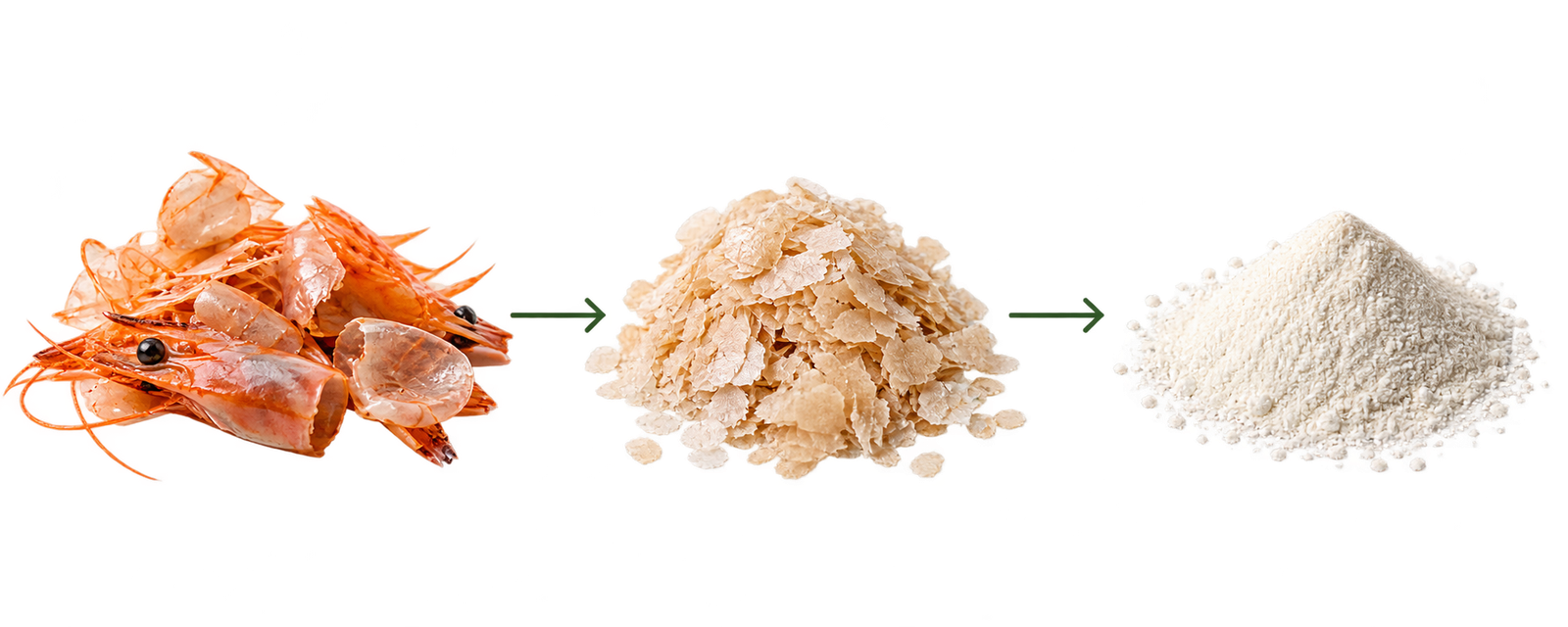
It starts with a shrimp shell.
Shrimp wear a hard shell to protect themselves — like a knight wears armor. That shell is made of a natural material called chitin. Every year, the seafood industry throws away hundreds of thousands of tonnes of shrimp shells as waste.
We take that waste and process it into chitosan — the same protective material, unlocked and put to work. It’s natural, it breaks down on its own over time, and it’s already recognized as safe to use around food in the US, Europe, and across Asia.
The shell used to protect the shrimp. Now it protects your food.
How it works
Chitosan fights germs like a magnet.
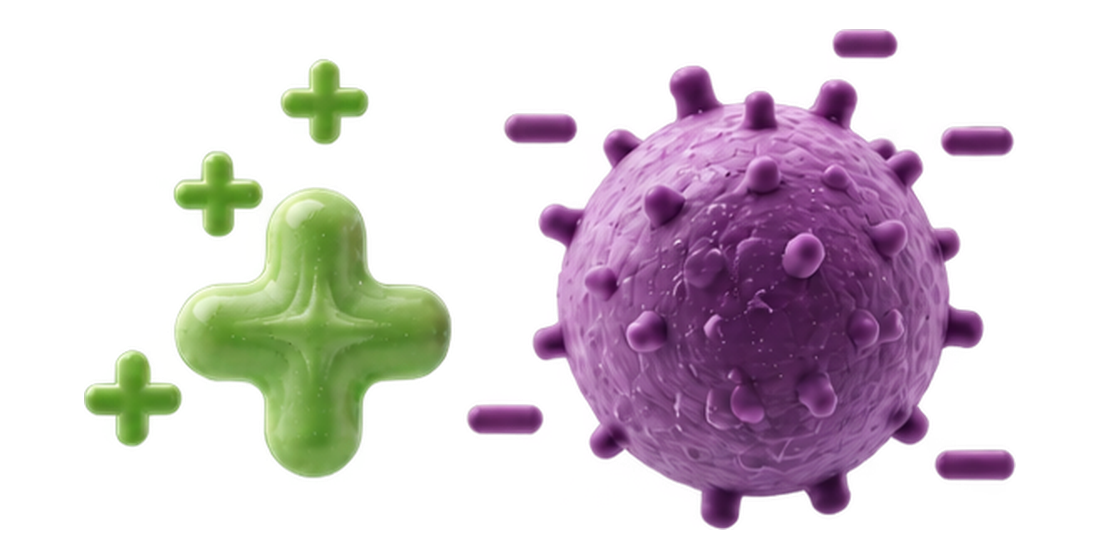
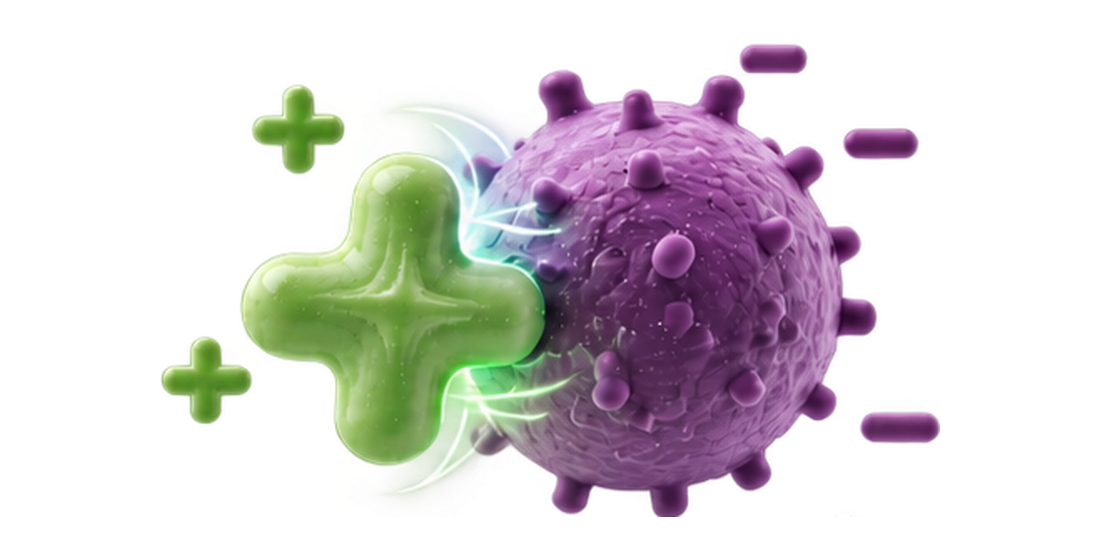
Chitosan carries a tiny positive charge. Germs — bacteria and mold — carry a negative charge on their outer wall. Opposite charges pull toward each other, just like magnets.
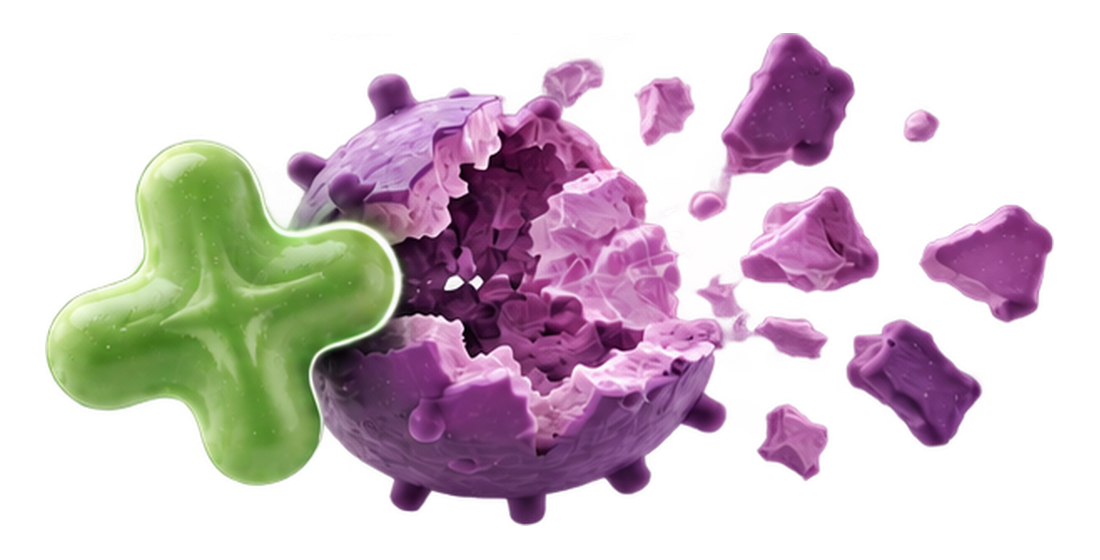
So chitosan grabs onto a germ, sticks to its outer wall, and pulls it apart. Once the wall is broken, the germ can’t survive.
No harsh chemicals. No spraying. Just a natural, physical reaction.
One material. Three jobs.
Block
Strengthen
The science has been proven for decades. The problem was never the science. It was delivery.
Why standard chitosan falls short
How Karmic is different
Twenty-five years of applied formulation expertise.
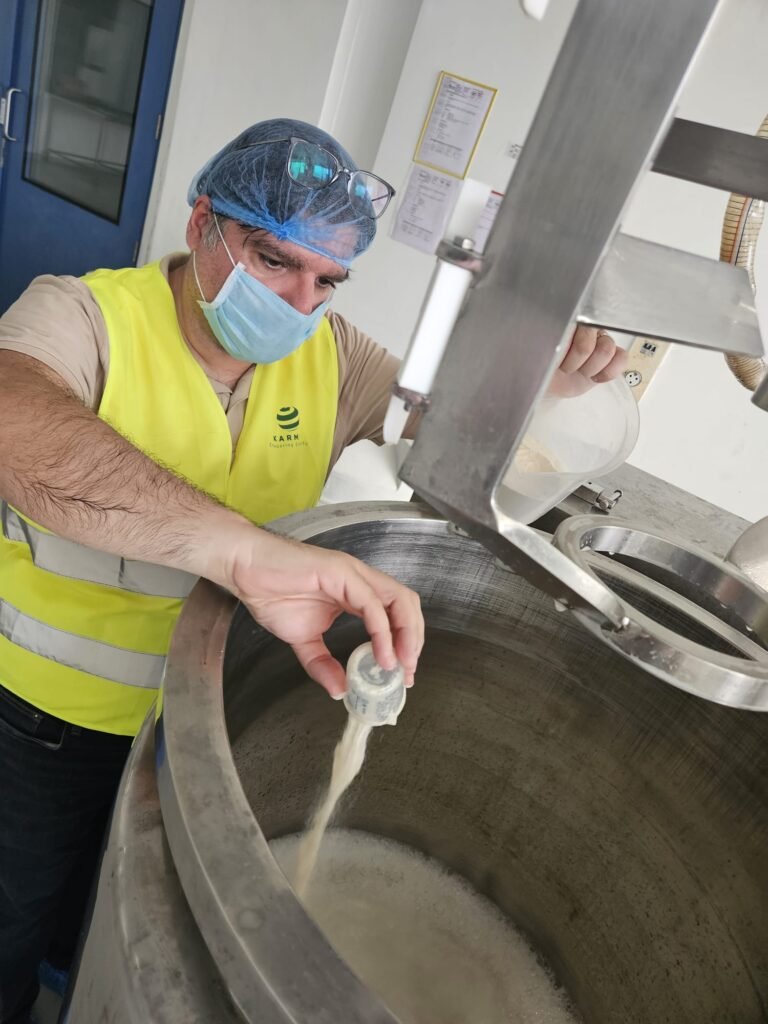
Food-safe. Traceable. Built for regulated supply chains.
Questions we get a lot.
Is chitosan safe?
Yes. Chitosan is already recognised as food-safe by regulators in the US, EU, and across Asia.
Is it natural?
Yes. It’s made from shrimp shells — waste left over from seafood processing — not from petrochemicals or anything synthetic.
Why haven't I heard of this?
Chitosan itself isn’t new — it’s been used safely in food, agriculture, and medicine for decades. What’s new is a company built to produce and apply it at commercial scale, from waste nobody else was using.
We have looked at this in the past and it hasn’t worked, why is this different?
Most of what’s been tried before is off-the-shelf chitosan, and it has real problems: it doesn’t dissolve well in water, goes inactive at normal pH — which is where most food, water, and soil actually sit — and that impacts both efficacy and economics. We don’t use off-the-shelf chitosan. We formulate purpose-built blends for each specific use — wash, ice, packaging, soil — solving exactly the problems that made earlier attempts fail.